


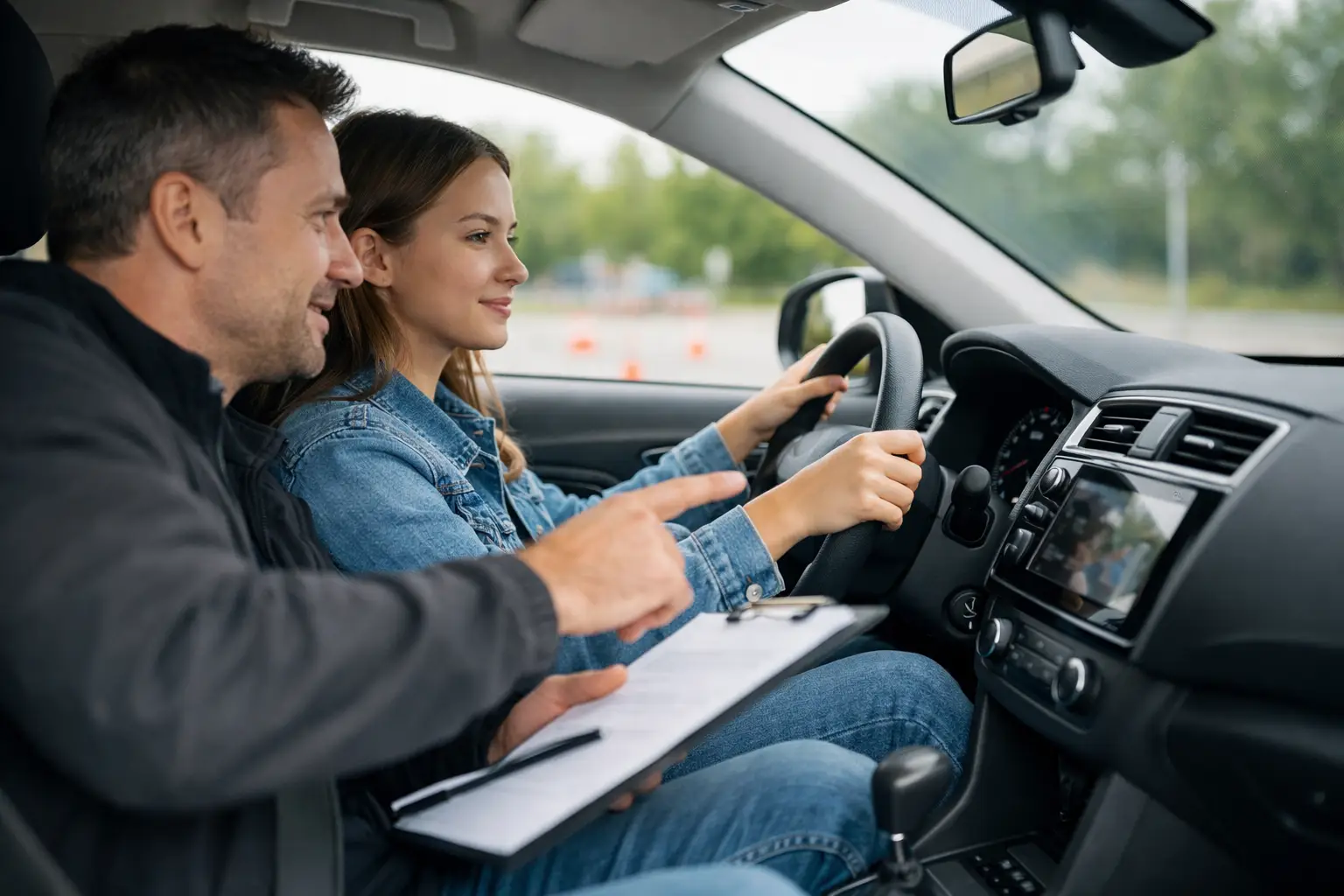
Most learners do not stall because they are bad drivers. They stall because everything is new at once – mirrors, pedals, signals, steering, other road users, and the simple fact that sitting in the driver’s seat suddenly feels very different from being a passenger.
If you are wondering what happens in first driving lesson, the short answer is this: you will not be expected to know everything. A good first lesson is designed to help you settle in, understand the car, and start building confidence in a calm, structured way. For many beginners, it is far more straightforward and reassuring than they expected.
What happens in first driving lesson for most beginners
Your first lesson usually starts before the car even moves. Your instructor will check that you have your provisional licence with you and may ask a few quick questions about any previous experience. Some learners have never touched a steering wheel, while others have practised in a parent’s car on private land. Both are fine. The lesson should be adjusted to your starting point, not someone else’s.
You will then be introduced to the car itself. This often includes the cockpit drill, which means setting up the seat, steering position, mirrors and seatbelt properly. It sounds basic, but it matters. A comfortable driving position gives you better control and helps you feel less tense.
After that, your instructor will explain the main controls. In a manual car, this usually means learning the clutch, brake, accelerator, gear stick and handbrake. In an automatic, there is less to think about with the pedals, but you still need to understand how the car responds and how to stay in control. Either way, the aim is not to overload you. A patient instructor will talk you through each part clearly and at your pace.
Most first lessons then move on to a quiet road or a low-traffic area. That gives you space to begin with the basics without too much pressure from busy junctions or fast-moving traffic.
The first skills you are likely to practise
On a typical first lesson, you will usually begin with moving off safely, stopping smoothly, steering, and basic clutch control if you are learning in a manual. These are the foundations of everything else, so it makes sense to start there.
Moving off sounds simple until you try to coordinate mirrors, signals, biting point, handbrake and road awareness together. This is why learners often find the first few attempts a little awkward. That is completely normal. Your instructor is expecting it. The goal is progress, not perfection.
Stopping the car in a controlled way is another early skill. You will learn how to brake gently, where to position the car, and what checks matter before pulling away again. Even this first step teaches useful habits that stay with you long after you pass your test.
Steering is often included quite early too. Many learners assume steering will be the easy part, but keeping the car well positioned on the left and judging the road ahead can take a bit of practice. A quiet residential road is usually the best place to start.
If time allows, your instructor may also introduce simple junction work or turning left and right into side roads. That depends on how comfortable you feel and how the lesson is going. Some people are ready for that in the first session. Others need more time with basic control, and that is perfectly fine.
What your instructor is actually looking for
Your first lesson is not a test. Your instructor is not expecting a polished performance. They are watching for something much more useful – how you learn, what makes you nervous, and what kind of explanation helps things click.
Some learners need to talk through each step out loud. Others prefer a simple demonstration and then a chance to try it. Some build confidence quickly once the car is moving, while others need a little more reassurance before they relax. A good instructor uses that first lesson to get a clear picture of how to teach you well.
This is one reason structured tuition matters. Driving is not only about getting the car from one road to another. It is about developing safe habits, awareness, and calm decision-making. If your first lesson is taught properly, it sets the tone for everything that follows.
Will you drive on your first lesson?
In most cases, yes. Many learners worry they will spend the whole lesson talking about mirrors and pedals, but you will usually get the chance to drive quite early on. That said, how much actual driving you do depends on your confidence, the type of road, and whether you are learning manual or automatic.
A complete beginner in a manual car may need more time getting used to clutch control before covering much distance. Someone in an automatic may get moving more quickly because there is less to manage at once. Neither is better or worse – it simply changes the pace of the lesson.
The important point is that your first lesson should feel manageable. You are not being pushed into situations you cannot handle. You are being introduced to driving in stages, with support.
What to bring and how to prepare
The practical side is simple. Bring your provisional licence, wear comfortable shoes with a thin sole, and make sure you can see properly if you normally wear glasses. Try to arrive a few minutes early so you are not starting the lesson already flustered.
It also helps to be realistic about nerves. Feeling anxious does not mean you are not ready. It usually means you care about doing well. A calm instructor will expect first-lesson nerves and will work to make the experience feel steady and approachable.
If you want to prepare beforehand, it can help to look over the basic car controls and familiarise yourself with the Highway Code. You do not need expert knowledge before your first lesson, but a little familiarity can make everything feel less foreign.
Common worries about a first lesson
Many learners are most worried about stalling, making mistakes, or being judged. These concerns are understandable, especially if you have never driven before. In reality, mistakes are part of learning. Stalling a manual car, braking too sharply, or forgetting a mirror check on your first lesson is not unusual. It is expected.
Another common concern is whether other road users will get impatient. Sometimes they do, because roads are full of ordinary people having ordinary bad days. That is not a reflection of your ability. Your instructor is there to manage the situation and keep the lesson safe.
Some learners also worry that one lesson will reveal whether they are a naturally good driver. It does not work like that. Confidence develops over time, and progress is rarely perfectly smooth. One lesson might go brilliantly. The next might feel harder. That is still normal progress.
Manual or automatic on your first lesson
What happens in first driving lesson can differ slightly depending on whether you choose manual or automatic tuition. In a manual car, more time is usually spent on clutch control, finding the biting point and changing gears. For some learners, that extra coordination feels rewarding. For others, it adds pressure at the start.
In an automatic, you can focus more quickly on steering, observation, speed control and road positioning because there are fewer mechanical tasks to juggle. This can make the first lesson feel less daunting.
The right choice depends on your goals, budget, confidence level and the type of licence you want. There is no one-size-fits-all answer. What matters most is learning in a way that helps you stay safe and make steady progress.
What a good first lesson should feel like
By the end of your first lesson, you probably will not feel like an expert. You should, however, feel clearer about the process and more comfortable than when you started. That is the real sign of a productive first session.
A good lesson should leave you with a sense of direction. You should know what you practised, what went well, and what you will work on next time. You should also feel respected, not rushed. The right instructor balances encouragement with clear guidance so that confidence is built on real skill, not false reassurance.
For learners in Bath and the surrounding area, that local knowledge can help as well. Quiet roads, suitable practice routes and gradual exposure to different traffic conditions all make a difference when you are starting out. That is part of what helps first lessons feel structured rather than overwhelming.
At SE7EN Driving School, the focus is on helping learners become safe, confident drivers for life, and that starts with making the first lesson feel calm, practical and achievable.
If you have been putting off booking because you are worried about what might happen, the truth is usually much simpler than the worry. Your first driving lesson is not about proving yourself. It is about starting, one careful step at a time.