


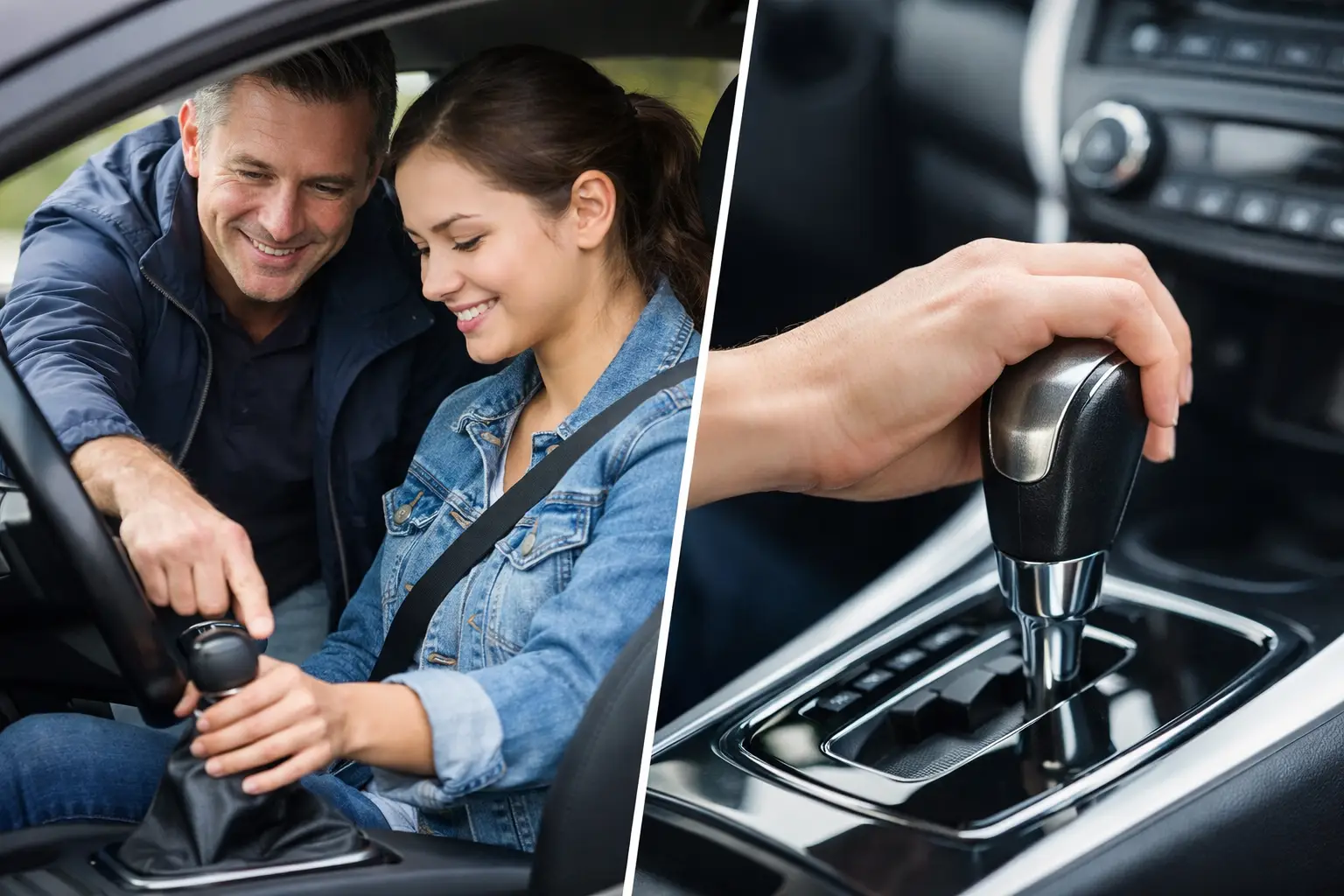
Choosing between automatic and manual driving lessons is often one of the first big decisions a learner makes, and it can shape how confident you feel from your very first time behind the wheel. For some people, the choice is obvious. For others, it comes down to nerves, budget, local driving conditions, and how quickly they want to reach test standard.
If you are learning in Bath or nearby areas, that decision can feel even more practical. Steep hills, busy roundabouts, stop-start traffic and mixed road types all affect how different cars feel to drive. The right lesson type is not just about passing a test. It is about learning in a way that helps you stay calm, safe and in control.
What is the difference between automatic and manual driving lessons?
The basic difference is simple. In a manual car, you use a clutch pedal and change gears yourself. In an automatic car, the vehicle changes gear for you, so there is no clutch pedal to manage.
That changes the learning experience quite a bit. Manual lessons ask you to learn clutch control, gear selection, hill starts and the timing involved in moving off smoothly. Automatic lessons remove that part of the workload, which means many learners find it easier to focus on steering, road position, speed and hazards.
Neither option is inherently better for everyone. It depends on how you learn, how comfortable you feel under pressure, and what you want from your licence.
Why some learners prefer automatic driving lessons
Automatic lessons are often a strong fit for nervous beginners, older learners, and anyone who feels overwhelmed by having too many things to think about at once. If your main concern is building confidence on the road, an automatic car can make those early lessons feel more manageable.
Without clutch control and gear changes, learners often settle into traffic more quickly. Busy junctions feel less stressful. Stop-start driving can feel smoother. Hill starts are usually less intimidating. That can make a real difference if anxiety is one of the main barriers to learning.
Many learners also feel they progress faster in an automatic because there are fewer mechanical skills to master. That does not mean the lessons are easier in every sense. You still need strong observation, anticipation, judgement and safe driving habits. But with fewer controls to manage, some people reach a confident standard sooner.
There is a trade-off, though. If you pass your test in an automatic, your licence only allows you to drive automatic cars. You would need to pass another test if you later wanted to drive a manual.
Why manual driving lessons still suit many learners
Manual driving lessons remain popular because they offer more flexibility after you pass. A manual licence allows you to drive both manual and automatic cars, which can be useful when buying a first car, borrowing a family vehicle, or looking at work opportunities where manual driving is expected.
Some learners also like the feeling of having more control over the car. Once the clutch and gears start to click, manual driving can become second nature. For confident learners who enjoy understanding how the car responds, manual tuition can feel rewarding rather than stressful.
Cost can also influence the decision. In some cases, manual cars are more affordable to buy and insure as a first vehicle, although that varies by model, age and local availability. So while manual lessons may feel more demanding early on, they can offer practical benefits later.
Automatic and manual driving lessons – which is easier to pass in?
This is the question most learners really mean to ask, and the honest answer is that automatic often feels easier to learn in, but that does not automatically guarantee a quicker pass.
With automatic lessons, many people need less time to feel comfortable moving off, stopping and coping with traffic. That can create faster early progress. If a learner is struggling mainly with clutch control or stalling, automatic tuition may remove the problem that is holding them back.
Manual lessons, on the other hand, can take longer at the start because you are learning more at once. But if you adapt well to the extra coordination, the gap may not be as big as you expect.
Passing also depends on consistency, lesson frequency, private practice where available, and how well your instruction is tailored to you. A calm learner in a manual may progress better than an anxious learner in an automatic if the teaching approach is right. The car matters, but the quality of instruction matters just as much.
Think about your confidence, not just the gearbox
A lot of learners choose based on what friends are doing or what they think they should do. In reality, the better question is this: what helps you learn well?
If you are very nervous, have struggled with lessons before, or want to reduce pressure so you can focus on road awareness, automatic may be the better route. If you want broader driving options after you pass and you are happy to invest time in mastering the extra skills, manual may suit you better.
There is no failure in choosing automatic. It is simply a route that matches some learners better. Equally, choosing manual does not mean choosing the harder option for the sake of it. For many people, it is still the most practical long-term choice.
How local roads can influence your choice
Driving in and around Bath, Bristol, Keynsham and Kingswood brings a mix of learning conditions. You may deal with narrow residential roads, hills, heavier traffic, multi-lane roundabouts and changing speed limits in a short space of time.
In those conditions, an automatic can reduce the amount you need to manage in the car itself, especially on steep inclines or in slow-moving traffic. That is one reason some learners feel more relaxed in automatic lessons.
At the same time, learning manual on mixed local roads can build excellent control and awareness if you are supported properly. A patient instructor can help you break each skill into manageable stages, so the environment becomes part of your learning rather than something to fear.
Cost, lesson time and value for money
Many learners assume one option is always cheaper. It is not quite that straightforward. Manual and automatic lesson prices can vary, and the bigger difference is often the number of lessons needed overall.
If automatic helps you gain confidence faster, you may need fewer lessons before test standard. In that case, the total cost could compare favourably, even if the lesson price is slightly different. If manual takes longer but gives you more flexibility after passing, that may still represent better long-term value.
This is why structured tuition matters. Regular two-hour lessons, clear progress tracking and block booking options can help learners build momentum instead of repeating the same problems week after week. Good lessons are not just about time in the car. They are about steady improvement.
Can you switch from manual to automatic or the other way round?
Yes, and sometimes that is the right decision. If you started manual and feel stuck because clutch control is draining your confidence, moving to automatic can help you move forward. It is a practical change, not a setback.
Switching from automatic to manual can happen too, though it is usually done by learners who already feel comfortable with road skills and want the wider licence. In that case, you are adding gear work later rather than trying to learn everything at once.
A good instructor will be honest about whether a switch is likely to help. The aim should always be safe, confident driving, not pushing you into a lesson type that does not suit you.
Choosing the right driving lessons for you
The best choice usually comes down to three things: how anxious you feel, what licence flexibility you want, and how you learn most effectively. If reducing stress is the priority, automatic can be a smart and confidence-building option. If future choice matters most, manual may be worth the extra effort.
What matters is learning with an instructor who is patient, clear and focused on proper driving habits, not just test routes. At SE7EN Driving School, that means helping learners build skill step by step, at a pace that feels manageable.
You do not need to have it all figured out before your first lesson. Sometimes the clearest answer comes once you are in the driver’s seat, getting calm, professional guidance and seeing what feels right for you.