


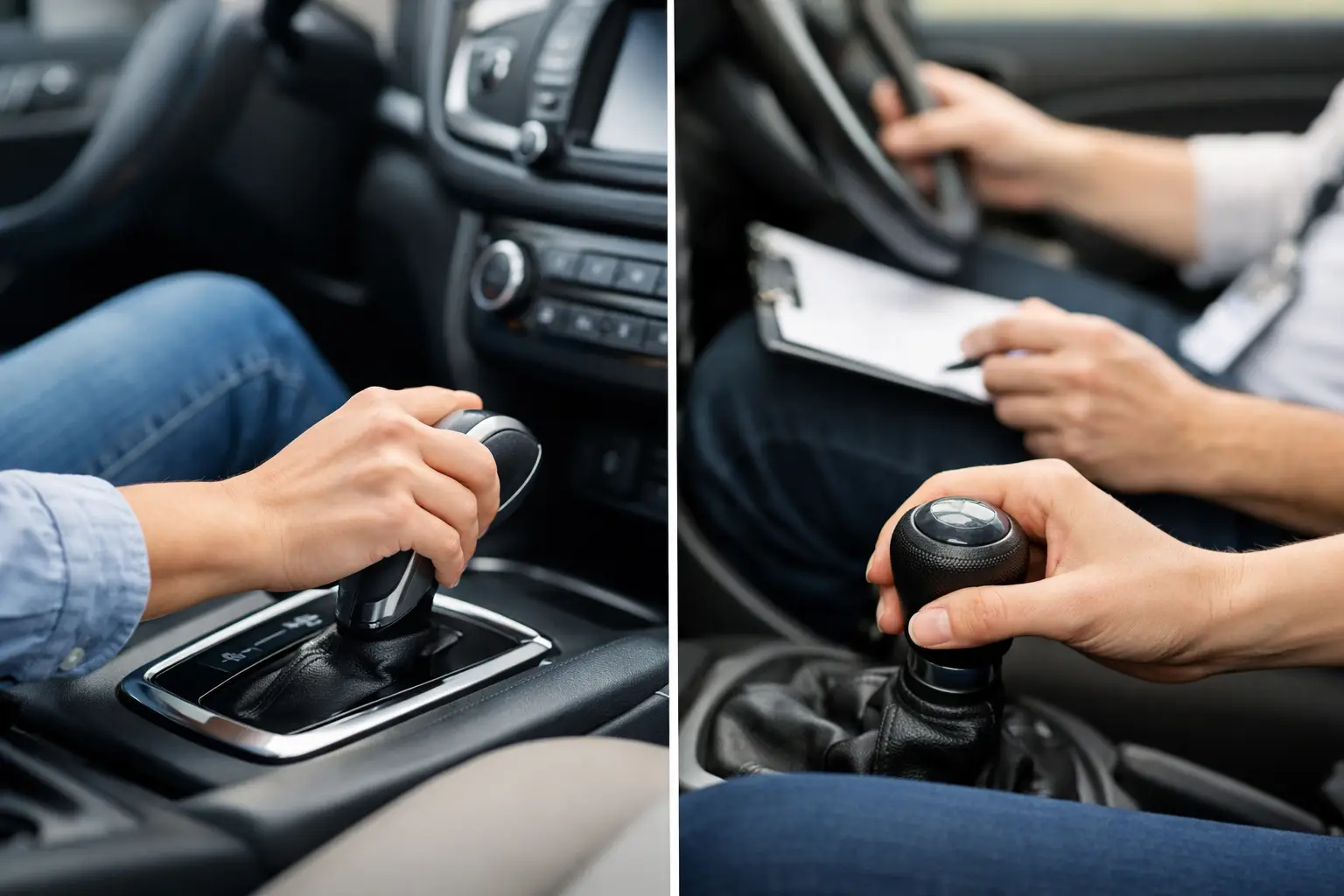
Choosing between automatic vs manual lessons often comes down to one very real question: what will help you feel calm, capable and safe behind the wheel? For some learners, an automatic car removes a lot of early pressure. For others, learning in a manual feels like the better long-term option because it gives more flexibility later on. There is no one-size-fits-all answer, and that is exactly why it helps to look at the decision properly before you book.
If you are learning in Bath, Bristol, Keynsham or Kingswood, your choice should fit your confidence level, your daily routine and the kind of driving you expect to do after passing. The best lessons are not just about getting through a test. They should help you build habits that make everyday driving feel manageable.
Automatic vs manual lessons: the main difference
The biggest difference is workload. In a manual car, you will learn clutch control, gear changes and how to balance the car properly in different situations. That means more to think about, especially at junctions, roundabouts, hill starts and in stop-start traffic.
In an automatic, the car changes gear for you. You still need good observation, road positioning, speed control and sound decision-making, but you remove the extra mechanical steps that can make early lessons feel busy. For nervous beginners, that can make a noticeable difference.
This does not mean automatic lessons are easy and manual lessons are hard. Both require concentration, practice and safe judgement. The real question is whether you want to learn all aspects of car control now, or whether you would benefit from reducing the pressure while you build confidence on the road.
Who often suits automatic lessons best?
Automatic lessons can be a strong choice if you feel anxious about learning to drive, have struggled with gears in the past, or want to focus first on traffic awareness rather than clutch control. They also suit many adults returning to lessons after a long break, as well as learners who expect to drive an automatic car after passing.
In busy urban areas, automatic cars can feel less tiring too. If much of your future driving is likely to be local commuting, school runs or town driving, an automatic may suit your day-to-day life very well. You spend less time worrying about stalling and moving off, and more time learning to read the road ahead.
For some people, this leads to faster progress. Not always, but often. When you remove one major source of stress, you may settle into lessons more quickly and feel more willing to keep going.
Who often suits manual lessons best?
Manual lessons may be the better fit if you want the broadest licence option and are comfortable taking on a bit more at the start. Passing your test in a manual allows you to drive both manual and automatic cars. Passing in an automatic means you are only licensed to drive automatics.
That matters to learners who want more freedom when buying a first car, sharing a family car or applying for jobs where driving could be involved. Although automatic cars are becoming more common, especially with the growth of hybrid and electric vehicles, manual cars are still widely available in the UK.
Manual can also make financial sense depending on what car you plan to drive afterwards. In some cases, a manual first car may be easier to find within budget. That said, the gap is changing over time, so this is less clear-cut than it used to be.
Is one easier to pass in?
This is one of the most common questions, and the honest answer is: sometimes, but not automatically.
Learners in automatic cars do not need to manage gears or clutch control during the test, so there are fewer chances to stall or make mistakes when moving off. For some learners, that makes the practical test feel more straightforward.
But the test still measures the same core driving skills. You still need safe observations, good planning, proper speed, lane discipline and control in different road conditions. If a learner is not ready, an automatic car will not hide weak decision-making.
A better way to think about it is this: automatic lessons may help certain learners become test-ready sooner because they feel calmer and can focus on the road. Manual lessons may take longer for some, but they can offer more flexibility after passing. The best option depends on how you learn rather than which gearbox sounds simpler.
Cost, lesson time and long-term value
Many learners assume manual is always better value, but the full picture is a bit more balanced. Manual lessons can sometimes be slightly cheaper in some areas, and manual cars may offer more options when you are shopping for your own vehicle. On paper, that can look like the cheaper route.
However, if manual lessons take you significantly longer because you are struggling with gears, the total cost may end up higher than learning in an automatic. A learner who needs fewer hours in an automatic may actually spend less overall. It depends on your pace, confidence and previous experience.
This is why it helps to think beyond the hourly lesson price. The real value is in making steady progress, developing safe habits and choosing the route that gives you the best chance of becoming a confident independent driver.
Automatic vs manual lessons for nervous learners
If you already feel tense just thinking about your first lesson, that matters. Learning to drive is a skill, but it is also an emotional process. When you feel overwhelmed, it becomes harder to take in instructions, judge speed or react calmly to changing traffic.
For nervous learners, automatic lessons can create a gentler starting point. You can focus on steering, mirrors, signals, road signs and hazard awareness without juggling the clutch at the same time. That often helps confidence grow more naturally.
Still, some nervous learners do very well in manual cars when lessons are structured properly and taught at the right pace. Patience from your instructor makes a huge difference. So does having time to repeat skills until they feel familiar rather than rushed.
Think about the car you are likely to drive after passing
This is where the decision often becomes clearer. If your household has an automatic car and that is what you will practise in or use after passing, automatic lessons may be the most practical choice. It makes sense to train in the kind of car you expect to drive regularly.
If you may need to borrow different cars, buy a lower-cost used vehicle or keep your options wide open, manual may be more useful. The licence flexibility can remove future limits.
There is also a middle ground. Some learners start in automatic because they want to pass and build confidence, then later choose to learn manual if they need that wider licence. That is not right for everyone, but it can work well for those who want to get safely on the road first.
Local driving conditions matter more than people think
Learners in and around Bath often face a mix of narrow residential roads, hills, busier town traffic, parked cars and complex junctions. In those conditions, manual driving can feel demanding at first, especially when you are practising hill starts or dealing with stop-start queues.
Automatic cars can take some of that pressure away, but local roads still require good anticipation and sound judgement. Whether you choose manual or automatic, you need lessons that prepare you for real routes, not just the test centre experience.
That is why structured tuition matters. A calm, local instructor who understands the roads you are likely to use can help you build confidence much more effectively than simply clocking up hours.
So, which should you choose?
Choose automatic if your priority is reducing stress, simplifying the learning process and getting comfortable on the road as soon as possible. It is often a sensible option for anxious learners, busy adults and anyone who knows they will drive an automatic after passing.
Choose manual if you want the fullest licence choice, expect to drive different vehicles and are happy to take on more at the start for greater flexibility later. It can be the right long-term investment if you are comfortable with a slightly steeper learning curve.
If you are still unsure, the best first step is not to guess. Talk it through with a qualified instructor who can look at your confidence, your goals and your likely driving needs. At SE7EN Driving School, that conversation is about finding the right fit for the learner, not pushing everyone down the same route.
The right choice is the one that helps you learn safely, make steady progress and feel genuinely ready to drive on your own when the L plates come off.