


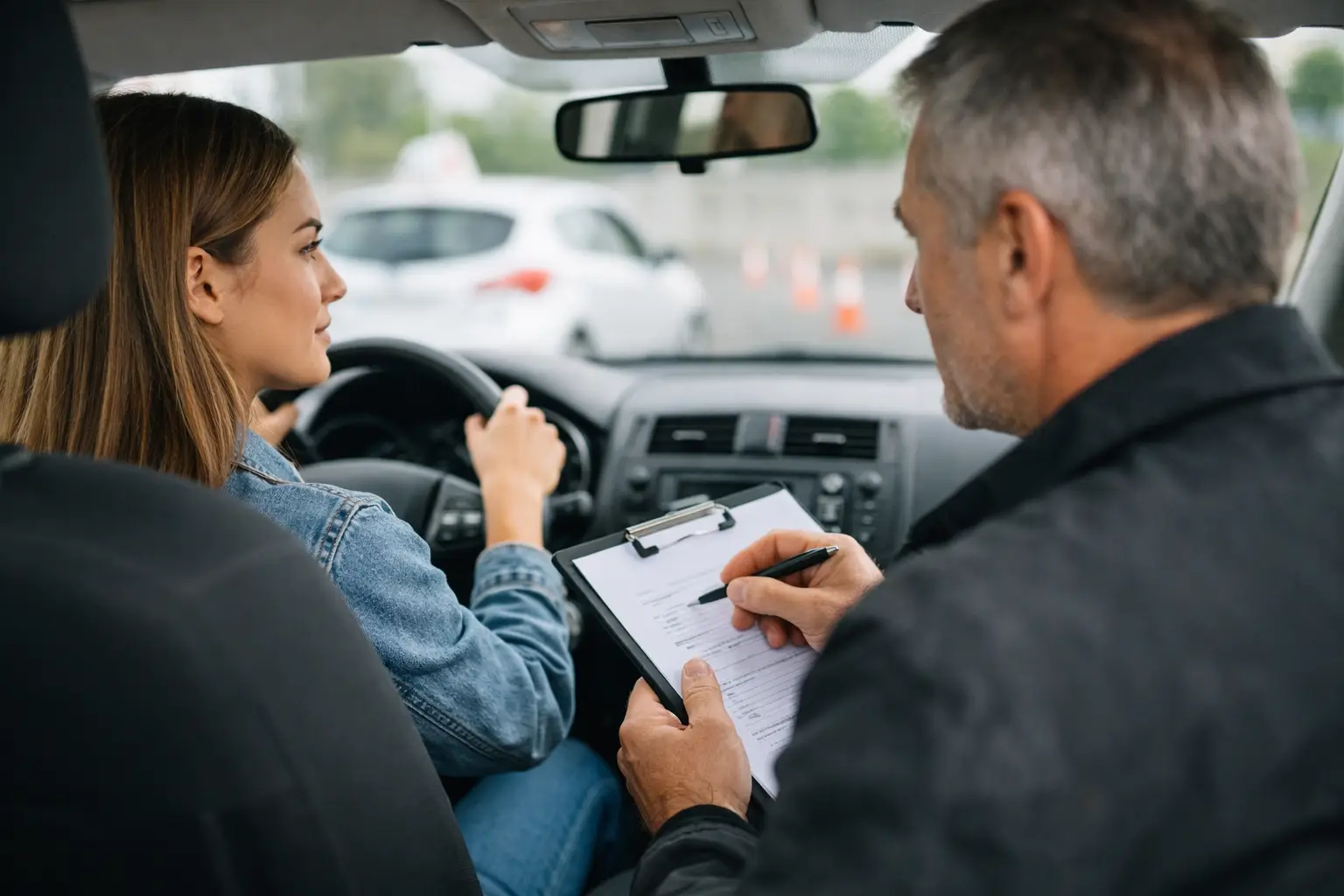
Some learners want a simple number before they book their first lesson. That is usually why people search dvsa how many lessons – they want to know how long this is all going to take, how much it may cost, and whether they are behind before they have even started.
The short answer is that the DVSA says most learners need around 45 hours of professional lessons, plus about 22 hours of private practice. That does not mean everyone will need exactly that amount, and it certainly does not mean you have failed if you need more. Learning to drive is not a race. It is a practical skill, and people learn practical skills at different speeds.
DVSA how many lessons is the average?
The DVSA figure is best treated as a guide, not a promise. If your lessons are two hours at a time, 45 hours works out at roughly 22 to 23 lessons with an instructor. If you are also getting regular private practice with a parent, partner or friend, you may reach test standard sooner. If you are only learning in weekly lessons with no extra time behind the wheel, it may take longer.
This is one of the biggest misunderstandings around driving lessons. People often hear the average and assume that is what they personally should need. In reality, average means some learners pass with fewer hours and plenty need more. Both are normal.
A calm, steady learner who practises between lessons may progress quickly. Someone who feels anxious at roundabouts, struggles with clutch control, or has long gaps between lessons may need extra time. That is not wasted time. It is part of building safe habits properly.
Why lesson numbers vary so much
No two learners start from the same place. Some have already spent time on quiet roads with family. Others begin with no road experience at all and need time just to get comfortable with the car, mirrors and basic controls.
Confidence plays a big part as well. A nervous beginner may understand what to do but need more repetition before it feels natural. Another learner may pick up manoeuvres quickly but need extra work on planning, awareness and decision-making in busy traffic.
Manual or automatic can also make a difference. Many learners find automatic easier at the start because they can focus fully on speed, steering, road position and observation without also managing gears and clutch control. That can reduce lesson time for some people. Manual learners often need more early practice, especially with moving off, hill starts and stalling recovery, but plenty prefer it for the longer-term flexibility it gives them.
Location matters too. Learning around Bath, Bristol, Keynsham or Kingswood means dealing with real traffic conditions, varied road layouts, parked cars, hill starts, mini roundabouts and busier junctions. That is useful experience, but it can mean learners need a little more time than someone learning mainly on quieter rural routes.
What counts more than the number of lessons
It is easy to focus on hours because they are measurable. What matters more is whether you are making consistent progress in the right areas.
A learner who has done 20 focused hours with a good instructor and regular practice may be in a stronger position than someone who has done 30 scattered hours with long breaks in between. Continuity helps. So does having lessons that build logically from one stage to the next.
Good driving is not just about getting the car moving and passing the manoeuvres. You need to read the road, spot hazards early, judge speed, manage junctions safely and stay calm when something unexpected happens. Those are the parts that often take longer, and they are exactly the skills that matter most once you pass.
Signs you may need fewer or more lessons
If you are trying to estimate your own timeline, it helps to look at your learning habits rather than compare yourself with friends.
You may need fewer lessons if you are having regular weekly sessions, getting private practice, learning in an automatic, and feeling relaxed enough to apply feedback quickly. Learners who reflect between lessons and remember what went wrong last time often progress faster as well.
You may need more lessons if you only drive occasionally, switch instructors, take long breaks, or feel very anxious in traffic. The same applies if you are learning in a manual and finding the basic controls difficult. None of that means you are a poor driver. It just means your learning plan may need more time and structure.
There is also a difference between being able to complete a route and being consistently test ready. Some learners can drive well on familiar roads but still need extra lessons to handle independent driving, unfamiliar sat nav routes, or more complex situations with confidence.
How often should you have lessons?
Lesson frequency can affect the total number you need. Weekly lessons are common and work well for many people, especially if they are paired with private practice. Two-hour sessions can be particularly useful because they give you time to settle in, work on a skill properly and review what you learned.
If lessons are too far apart, you may spend part of each session catching up on things you had already covered. That can slow progress and increase overall cost. On the other hand, cramming too much in can leave some learners overwhelmed.
For most people, the best balance is regular lessons with enough time in between to absorb feedback and, where possible, practise. Steady progress usually beats rushing.
Private practice can make a real difference
The DVSA average includes private practice for a reason. Time spent driving with a suitable supervising driver can help you build experience more quickly, especially on quieter roads at first.
That said, private practice only helps if it is done well. If the person supervising you gives mixed messages, encourages bad habits, or gets impatient, it can knock your confidence and confuse your progress. Professional lessons and private practice work best when the standard is consistent.
A simple approach often works best. Use instructor time to learn new skills correctly, then use private practice to repeat them safely. Repetition is where confidence starts to grow.
Should you book your test based on the DVSA average?
Not on the average alone. The better question is whether you are driving safely and consistently across the full range of test conditions.
Being nearly ready is not the same as being ready. If you book too early, you may put yourself under pressure and end up paying for extra tests. If you wait until your instructor can see that you are dealing with junctions, roundabouts, manoeuvres and independent driving reliably, you give yourself a much better chance.
A good instructor will not guess. They will look at whether you can drive without constant prompts, whether your faults are occasional or repeated, and whether you can stay safe when the road gets busy or plans change.
Cost, value and the bigger picture
Most learners ask about lesson numbers because they are really asking about cost. That is understandable. Driving lessons are an investment, and nobody wants to pay for hours they do not need.
But there is a trade-off here. Chasing the cheapest route or trying to rush to test standard can cost more in the long run if you pick up poor habits, lose confidence or need to retake the test. Better value often comes from structured lessons, regular practice and clear progress from week to week.
That is why many learners benefit from block bookings and a plan that matches their stage. It creates continuity, helps you stay committed and gives your instructor time to build your skills properly rather than patching gaps each session.
At SE7EN Driving School, that steady approach matters because the goal is not simply to get you through the test. It is to help you become a safe, confident driver for everyday life.
A more realistic way to answer dvsa how many lessons
If you want a realistic expectation, start with the DVSA average of 45 hours of professional tuition and 22 hours of private practice. Then adjust it based on your situation.
If you are learning in a manual, feeling nervous, or only driving once a week with no extra practice, expect it may take longer. If you are having regular lessons, practising between them and building confidence steadily, you may be close to that average or even below it.
The most useful number is not what someone else needed. It is the number of hours it takes for you to drive safely, confidently and independently. Once that clicks, the whole question feels less about how quickly you can pass and more about how well prepared you will be when you do.
If you are still at the beginning, try not to measure yourself against friends, siblings or online claims. Focus on consistent lessons, honest feedback and gradual improvement. Confidence on the road is built one good drive at a time.