


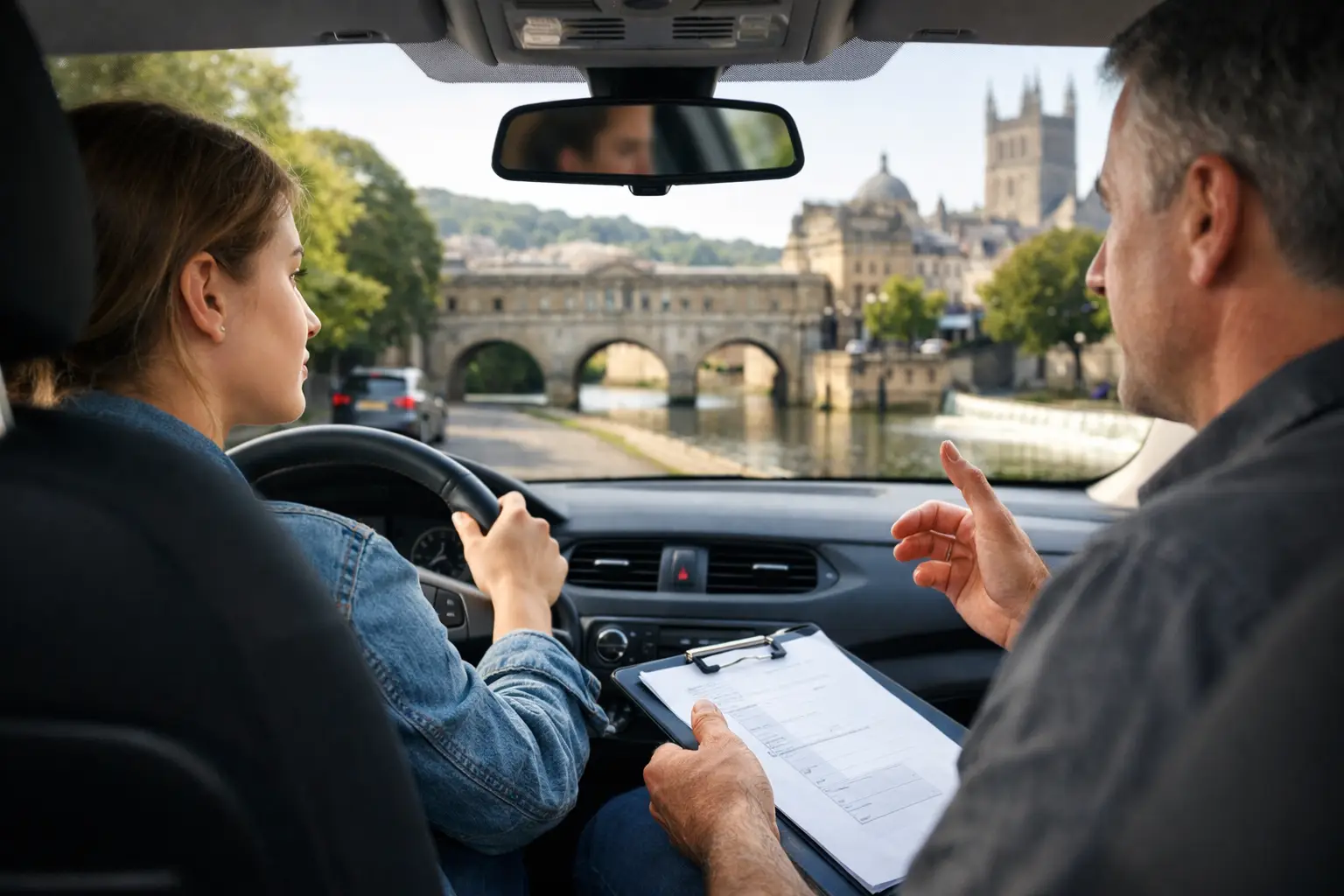
Your first time moving away from the kerb can feel like a lot to manage. Mirrors, pedals, road signs, other traffic and a new instructor’s directions all compete for attention. The best ways to learn driving are not about rushing through as many manoeuvres as possible. They involve calm, structured teaching, regular practice and enough time to turn each new skill into a safe habit.
For learners in Bath, Bristol, Keynsham and Kingswood, there is also the reality of varied local roads. You may begin on quieter residential streets, then build towards busy roundabouts, hill starts, dual carriageways and tighter city-centre routes. A good learning plan prepares you for all of it at a pace that feels challenging but manageable.
Start with professional, structured lessons
Learning with a DVSA-approved instructor gives you a clear foundation from the very beginning. Rather than picking up habits by trial and error, you learn the correct routines for moving off, stopping, steering, changing gear, using mirrors and dealing with junctions. This matters because early habits tend to stick, including the unhelpful ones.
A professional instructor can also spot issues you may not notice yourself. Perhaps you check your mirrors but do not act on what you see, hesitate too long at roundabouts, or steer well but lose control of your speed on a downhill road. Constructive feedback turns vague worries into one practical point to work on next.
Structured lessons should have a purpose. In one session, that may be approaching junctions safely. In another, it could be meeting traffic on narrow roads or practising bay parking. You do not need to be perfect before moving on, but you should understand the skill and be able to repeat it with growing independence.
Two-hour lessons can be particularly useful for beginners and learners who are close to test standard. They allow time to settle in, practise a skill more than once and drive in different road conditions without feeling that the lesson has ended just as you have found your rhythm.
Build practice around the lessons
Private practice with a suitable accompanying driver can make a real difference, especially when it supports what you have covered professionally. It gives you extra time behind the wheel and helps make familiar routines feel more natural. However, it works best when it is planned rather than treated as an occasional trip to the shops.
After a lesson on roundabouts, for example, practise simple roundabouts first and talk through your observations aloud if that helps. If you have been working on clutch control, choose a quiet route with a few gentle stops and starts before attempting steep hills or busy traffic. Repeating one manageable task is more useful than trying to tackle everything in a single drive.
Before each private practice session, agree one or two goals. You might focus on holding a safe road position, approaching junctions at the right speed, or making independent decisions on a familiar route. Afterwards, note what felt better and what still needs work. That information gives your instructor a useful starting point for the next lesson.
Be mindful that friends and family often have different driving styles and advice. Their support can be valuable, but the guidance from your instructor should remain the main reference point, particularly on current test expectations and safe driving routines. If advice conflicts, ask your instructor to explain the safest approach.
Choose manual or automatic for the right reasons
One of the most practical decisions is whether to learn in a manual or automatic car. Neither option is automatically right for everyone. The best choice depends on your confidence, how quickly you need a licence, the type of driving you expect to do and the vehicles you may want to drive in future.
An automatic car removes clutch control and gear changes, so some learners find they can concentrate more easily on steering, observation and planning ahead. This can be reassuring if you feel anxious or have found manual lessons difficult. Passing in an automatic gives you an automatic-only licence, which means you cannot drive a manual car unless you later pass a manual test.
Manual tuition takes more coordination at first, particularly with hill starts and slow-moving traffic. In return, a manual licence allows you to drive both manual and automatic vehicles. The key is not to choose based on what someone else did. Discuss your goals honestly with your instructor and select the route that gives you the best chance of becoming a safe, confident driver.
Learn to read the road, not just follow instructions
Passing the practical test requires more than being able to complete manoeuvres on command. Safe driving comes from looking far enough ahead, noticing developing risks and giving yourself time to respond. This is where many learners make their biggest progress.
As you drive, get used to asking yourself what could happen next. Could a pedestrian step out between parked cars? Is the vehicle ahead slowing for a turning? Is a cyclist likely to move around a parked car? Is the road narrowing after the bend? This does not mean expecting the worst. It means staying alert and leaving yourself options.
Good observation also makes driving smoother. If you spot a queue early, you can ease off the accelerator instead of braking sharply. If you identify the correct lane well before a roundabout, you are less likely to make a rushed decision. Examiners look for this forward planning, but it matters even more once you are driving alone.
Local knowledge can help here. Bath’s hills, narrow streets and changing traffic conditions are useful places to develop judgement, while routes around Bristol and Keynsham can provide experience of larger junctions and busier road layouts. Your lessons should gradually introduce more complex environments when you are ready, not throw you into them before your core control is secure.
Prepare for the theory test alongside driving lessons
The theory test is easier to manage when you study little and often, rather than leaving it until your practical test is approaching. Road signs, stopping distances, hazard awareness and rules at junctions all make more sense when you see them in real traffic during your lessons.
Try connecting your revision to what you have driven that week. If you encountered a box junction, review the rule behind it. If your instructor discussed tyre safety or following distance in wet weather, revisit those topics in your theory material. This approach helps you remember information because it has a clear real-world context.
Hazard perception deserves regular practice too. The aim is not simply to click quickly. It is to recognise the moment when a situation begins to develop, such as a child moving towards the kerb or brake lights appearing in traffic ahead. That same skill supports safer decisions on every drive.
Make room for nerves and mistakes
Nerves are common, whether you are 17, learning later in life or returning after a long break. They do not mean you are incapable of learning. Usually, they mean the task still feels unfamiliar or you are putting pressure on yourself to get everything right immediately.
Tell your instructor if a particular situation worries you, such as busy roundabouts, hill starts, parallel parking or driving in the rain. A patient instructor can break the task into smaller stages, demonstrate the process and give you repeated opportunities to practise without judgement. Confidence is built through evidence: you try something, improve it and realise you can handle it.
Mistakes are part of that process. Stalling, taking a wrong turn or needing a prompt does not erase the progress you have made. What matters is understanding why it happened and knowing what you will do differently next time. A calm recovery is a driving skill in its own right.
Keep a steady lesson rhythm
Long gaps between lessons can make it harder to retain new skills, especially at the beginning. A regular weekly slot, combined with private practice where possible, usually creates steadier progress than several lessons followed by a month away from the wheel. Block booking can also help learners commit to a consistent routine and give enough time for skills to develop properly.
There is no reliable number of hours that suits every learner. Some need extra time to become comfortable with car control, while others need more practice making independent decisions in complex traffic. Aim for progress, not comparisons. Being genuinely ready for your test is far more valuable than booking it because someone else thinks you should.
At SE7EN Driving School, lessons are tailored around your experience, confidence and goals, with the focus kept firmly on safe driving habits for life. The right support should leave you feeling clearer after each lesson, even when you have tackled something difficult.
A driving licence can bring more freedom, but the real achievement is knowing you can make safe decisions when nobody is sitting beside you. Take each skill one stage at a time, ask questions whenever you need to, and let consistent practice do the work of building confidence.