


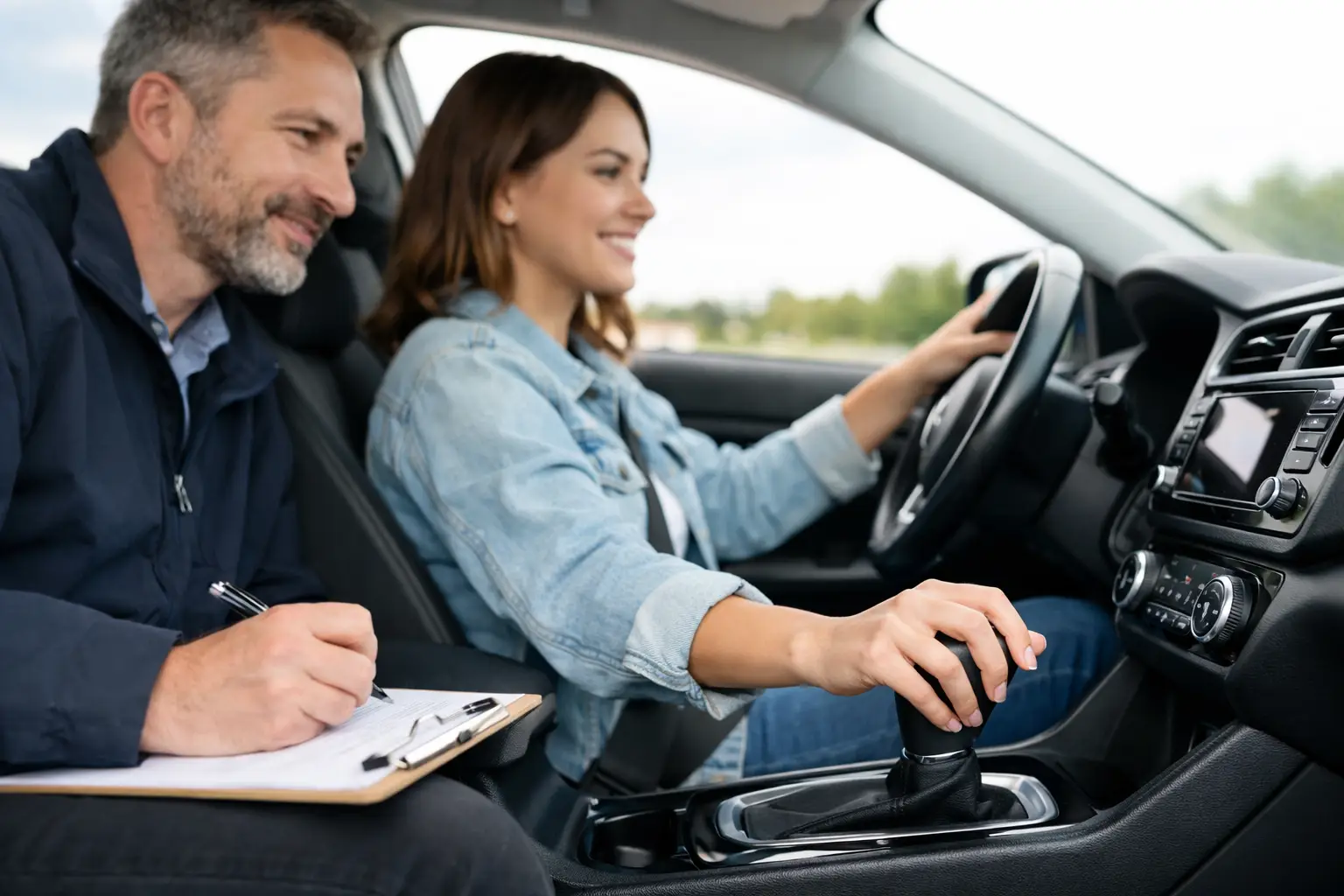
If you have ever stalled at a roundabout, panicked over clutch control, or worried about hill starts in Bath traffic, it is no surprise that you are asking whether automatic lessons are easier. For many learners, the short answer is yes – but that does not mean automatic lessons are effortless, or automatically the right choice for everyone.
The better question is why they often feel easier, and whether that kind of easier matches the way you want to learn. Some people want the quickest route to feeling calm behind the wheel. Others want the flexibility of a manual licence later on. Both are valid. The right decision depends on your confidence, your timeline, and how you cope with the early stages of learning to drive.
Are automatic lessons easier for beginners?
For most complete beginners, automatic lessons feel easier at the start because there is less to think about. You do not need to coordinate the clutch and accelerator, choose gears, or worry about stalling when moving off. That removes a large part of what many learners find stressful in their first few lessons.
Instead, you can focus more of your attention on steering, road position, mirrors, signs, speed awareness, and what is happening around you. Those are the skills that matter in every car, and they are often easier to build when you are not also trying to manage gear changes.
This can make a real difference for nervous learners. If you already feel anxious about traffic, junctions, or busy roads, simplifying the car itself can help you settle more quickly. A calmer learner is often a safer learner because they have more mental space to observe and plan.
That said, easier does not mean instant. You still need to learn judgement, anticipation, and safe habits. Automatic lessons remove some of the physical complexity, but they do not remove the responsibility of driving well.
Why automatic lessons often feel easier
The biggest reason is workload. In a manual car, you are constantly balancing speed, clutch control, gear choice, and timing. In slow traffic or stop-start conditions, that can be tiring. In an automatic, the car handles gear changes for you, so your attention stays on the road.
This is especially helpful in places where traffic conditions change quickly. Whether you are dealing with mini roundabouts, uphill junctions, parked cars on narrow roads, or busier routes towards Bristol, having fewer actions to manage can make lessons feel more straightforward.
Many learners also find automatic cars smoother to drive in the early stages. There is less risk of stalling, fewer jerky gear changes, and less worry about getting the biting point wrong. When the car responds more predictably, confidence often builds faster.
For some pupils, that means they begin enjoying lessons sooner. Enjoyment matters more than people think. If each lesson feels manageable, you are more likely to stay consistent, practise well, and keep improving.
Where automatic is not necessarily easier
There is a point worth being honest about. Automatic lessons are easier in some ways, but the road itself is not easier. You still need to judge gaps, read road markings, respond to hazards, park accurately, and make safe decisions under pressure.
Learners sometimes assume automatic means they will pass quickly no matter what. That is not quite how it works. If observation, planning, or confidence at junctions are your main difficulties, automatic may help by reducing distractions, but it will not solve those issues on its own.
Parking can still take practice. Roundabouts still require good timing. Meeting situations on narrow roads still need calm decision-making. Test routes still demand concentration from start to finish.
In other words, automatic can make learning feel more accessible, but it does not replace proper instruction or steady practice. A supportive instructor, regular lessons, and enough time to develop safe habits still matter a great deal.
Manual versus automatic lessons
When people compare the two, they are usually weighing simplicity against flexibility. Automatic is simpler to learn in because there are fewer controls to master. Manual gives you a wider licence, which means you can legally drive both manual and automatic cars after passing.
If you pass in an automatic, your licence only covers automatic vehicles. For some learners, that is completely fine. Automatic cars are increasingly common, and many drivers have no need or desire to drive manual later.
For others, especially if you want the broadest choice of used cars or might need to drive someone else’s manual vehicle, that restriction matters. In those cases, manual may be worth the extra challenge.
So if you are asking, are automatic lessons easier, the answer is yes for most learners. But if you are really asking which option is better, the answer depends on your longer-term needs as much as your first few lessons.
Who usually benefits most from automatic lessons?
Automatic lessons often suit learners who feel overwhelmed by multitasking. They can also be a very good fit for adults learning later in life, pupils who have had difficult experiences in manual lessons, and anyone who wants to reduce anxiety and build confidence step by step.
They also make sense for learners on a tighter timeline. If your goal is to get on the road sooner for work, university, family responsibilities, or day-to-day independence, automatic can sometimes help you progress more efficiently because less lesson time is spent on gear control.
Refresher learners may benefit too. If you have had a long break from driving and want to return in a way that feels calmer, automatic can take away some of the pressure.
At SE7EN Driving School, this is often where structured, patient teaching makes the difference. The car type matters, but so does learning with someone who keeps lessons calm, clear, and matched to your pace.
Are automatic lessons easier to pass in?
They can be, but only in the right circumstances. Many learners make faster progress in an automatic because they have fewer technical tasks to manage. That can mean more consistent lessons, better concentration, and fewer mistakes caused by clutch or gear issues.
On a practical test, that may help you feel less flustered. You are less likely to stall at a junction or choose the wrong gear on approach to a hazard. For some pupils, that reduction in pressure is enough to improve overall performance.
Still, examiners are not marking you on whether the car is automatic or manual. They are marking your safety, awareness, control, and decisions. If your observations are poor or your planning is rushed, an automatic car will not hide that.
So yes, automatic lessons can make passing feel more achievable, especially if car control has been your main struggle. But passing still comes from preparation, not from transmission alone.
How to decide what is right for you
A good starting point is to ask what has been holding you back. If the thought of gears and clutch control fills you with dread, automatic may remove the main barrier that is affecting your progress. If you are generally confident and want the widest licence option, manual may still be worth pursuing.
It also helps to think practically. What kind of car are you likely to drive after passing? What is your budget? Do you need to pass by a certain date? Are you returning to learning after a long gap? These questions matter more than opinions from friends who learned in different circumstances.
The most useful choice is the one that helps you become a safe, confident driver – not the one that sounds harder, easier, or more impressive. Driving is not a competition. It is a life skill.
If automatic lessons help you stay calmer, learn more clearly, and build steady confidence on the road, that is a strong reason to choose them. And if manual suits your goals better, that is equally valid. The best path is the one that keeps you progressing.
A driving lesson should leave you feeling that you are getting somewhere, even if you are still learning. If automatic gives you that sense of progress and confidence, it may be the right place to start.