


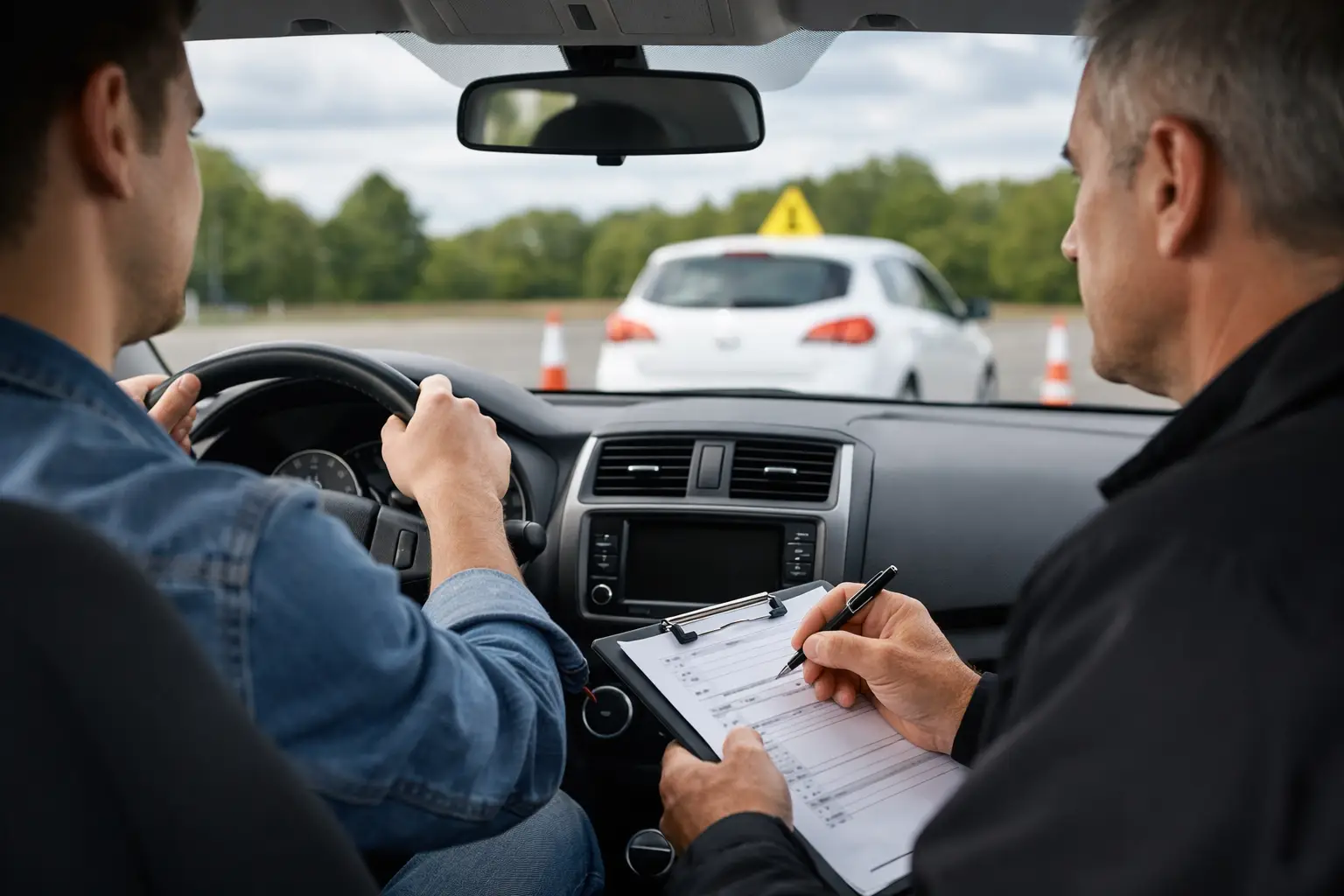
If you have been asking what is DVSA driving test, you are probably at the point where driving starts to feel very real. The practical test is the part that shows whether you can drive safely, independently and confidently on UK roads. For many learners, it sounds more intimidating than it actually is – especially when you understand what the examiner is looking for.
The DVSA driving test is not there to catch you out. It is designed by the Driver and Vehicle Standards Agency to check that you can drive to a safe standard without help from your instructor. That means using the car properly, making good decisions, following road signs, and showing that you can deal with normal traffic situations calmly.
What is DVSA driving test and who runs it?
The DVSA driving test is the official practical car test in Great Britain. DVSA stands for the Driver and Vehicle Standards Agency, the government body responsible for setting driving standards, approving instructors and running practical tests.
When people talk about “the driving test”, this is usually what they mean. It takes place at a DVSA test centre and is carried out by a trained examiner, not by your instructor. Your instructor can take you to the centre and help you prepare beforehand, but once the test begins, the examiner is the person assessing your driving.
That matters because the test follows a clear national standard. Whether you take it in Bath, Bristol or elsewhere, the examiner is marking the same core skills. Local roads may vary, but the standard does not.
What the DVSA driving test includes
The practical test usually lasts around 40 minutes. If you are taking an extended test after a driving disqualification, it lasts longer, but most learners will take the standard version.
At the start, the examiner will ask you to read a number plate from a set distance. This is the eyesight check. If you cannot do that, the test cannot continue.
You will then be asked one vehicle safety question. These are known as the “show me, tell me” questions. One is asked before you start driving and one while you are driving. They cover basic car checks such as how to test the brakes, check the lights or demist the windscreen.
During the drive itself, you will be asked to complete normal road driving in different conditions where possible. That may include roundabouts, junctions, dual carriageways, pedestrian crossings and residential roads. The examiner wants to see safe observation, proper control of the car, sensible positioning and sound judgement.
You will also complete one reversing manoeuvre. This could be bay parking, parallel parking at the side of the road, or pulling up on the right and reversing for a short distance. You may also be asked to carry out an emergency stop.
Part of the test includes independent driving. For around 20 minutes, you will either follow sat nav directions or traffic signs. This does not mean the examiner expects you to know every route perfectly. It is a check that you can drive safely while following directions, even if you take a wrong turn.
What examiners are really assessing
A lot of learners think the test is mainly about perfect manoeuvres. In reality, the bigger issue is safety. A slightly untidy bay park might still pass if it is under control and finished safely. A confident but careless approach to a roundabout is more likely to cause problems.
The examiner is looking at how you manage risk. That includes mirrors before changing speed or direction, awareness of other road users, speed control, lane discipline and your response to hazards. They are also watching for signs that you can stay calm and make sensible decisions when the road is busy or unclear.
This is one reason good lessons matter. Learning only how to pass can leave gaps in your driving. Learning how to deal with real roads, real traffic and real pressure usually gives you a better chance in the test and after it.
Faults, serious faults and what causes a fail
The DVSA test report is divided into driving faults, serious faults and dangerous faults. A driving fault is a minor issue that does not create actual danger, such as forgetting a mirror check once or hesitating a little too long. You can still pass with up to 15 driving faults.
A serious fault means something went wrong in a way that could be unsafe. A dangerous fault means there was actual danger to you, the examiner, the public or property. One serious or dangerous fault results in a fail.
Common reasons learners fail include poor observation at junctions, ineffective mirror use, incorrect positioning, problems with reverse parking and responding too late to traffic signs or road markings. Nerves often play a part, but nerves alone do not fail tests. It is usually the rushed decision that comes from them.
What is DVSA driving test preparation meant to look like?
Good preparation is not just doing a few mock tests and hoping for the best. The most useful approach is steady practice across the skills you use every lesson – moving off, stopping, meeting traffic, handling roundabouts, parking, and reading the road ahead.
You also need practice in the kinds of areas where tests often happen. That does not mean memorising routes turn by turn. It means becoming comfortable with the local road types, tricky junctions and traffic patterns you are likely to meet. A learner in Bath, for example, may need extra confidence with hill starts, parked cars, narrow roads and busier town traffic.
Mock tests can help, but only when they are used properly. They are useful for spotting habits under pressure, not for frightening you. A calm instructor should explain why faults happen and how to correct them, rather than making the whole thing feel like a disaster.
How to know when you are ready
There is no single magic sign that says you are test-ready. Most people are ready when they can drive safely and consistently with minimal prompts. You should be able to plan ahead, recover calmly from small mistakes and keep the car under control in a range of situations.
It also helps if you can drive for a full lesson without needing your instructor to step in regularly. That does not mean you never make mistakes. It means your mistakes are usually minor, and you can recognise and correct them yourself.
A trustworthy instructor will be honest about this. Sometimes learners want to book quickly because they are tired of waiting or keen to get on the road. That is understandable, but booking too early can cost more in the long run if you need another test.
On the day of the test
The best thing you can do on test day is keep the routine simple. Arrive in good time, bring what you need, and avoid last-minute cramming. If you have a lesson before the test, use it to settle in rather than trying to fix everything at once.
During the test, remember that one small mistake does not automatically mean you have failed. Many people make a minor fault early on and still pass. If something goes wrong, take a breath and focus on the next decision.
It is also fine to ask the examiner to repeat an instruction if you did not hear it clearly. That is much better than guessing. The test is about safe driving, not mind reading.
Why the DVSA test matters beyond getting a pass certificate
Passing the DVSA driving test gives you legal permission to drive on your own, but its real value is bigger than that. It marks the point where you can show that you are ready to share the road responsibly with other people.
That is why the best driving lessons are not just about test routes and manoeuvres. They are about building habits that stay with you after the L plates come off. Safe observation, patience at junctions, proper following distance and thoughtful speed choice are not test tricks. They are the foundations of everyday driving.
For learners who feel nervous, that should be reassuring. The goal is not to become flashy or flawless. It is to become safe, steady and capable. That is exactly what the DVSA driving test is designed to measure.
If you are working towards your practical test, try to see it as a check on your progress rather than a final judgement on you. With the right support, enough practice and a calm approach, it becomes much more manageable – and much closer than it first seems.