

Choosing how you want to learn often feels like the first real driving decision you make. If you are looking at an automatic and manual driving school, you are probably weighing up more than just the car itself. You are thinking about confidence, cost, how quickly you want to progress, and what kind of driver you want to become once the test is over.
For many learners in Bath and the surrounding area, this choice can feel bigger than it needs to be. The truth is that there is no single right answer for everyone. Automatic lessons suit some people brilliantly. Manual lessons are still the better fit for others. What matters most is choosing a route that helps you stay calm, learn safely and keep making steady progress.
What an automatic and manual driving school should offer
A good automatic and manual driving school does more than give you access to two types of tuition. It should help you understand which option matches your needs, your budget and your long-term plans. That means patient teaching, structured lessons and clear advice instead of pressure.
It also means learning with an instructor who can adapt the pace to you. Some learners need time to settle into basic steering and road position before adding gear changes. Others enjoy the extra control that comes with learning in a manual car. Neither approach is better by default. The quality of the teaching and how comfortable you feel in lessons matter just as much.
If you are nervous, returning to driving after a break, or learning later in life, the calmness of the lesson experience can make a real difference. The best schools understand that confidence does not appear overnight. It is built lesson by lesson.
Automatic or manual – what is the actual difference?
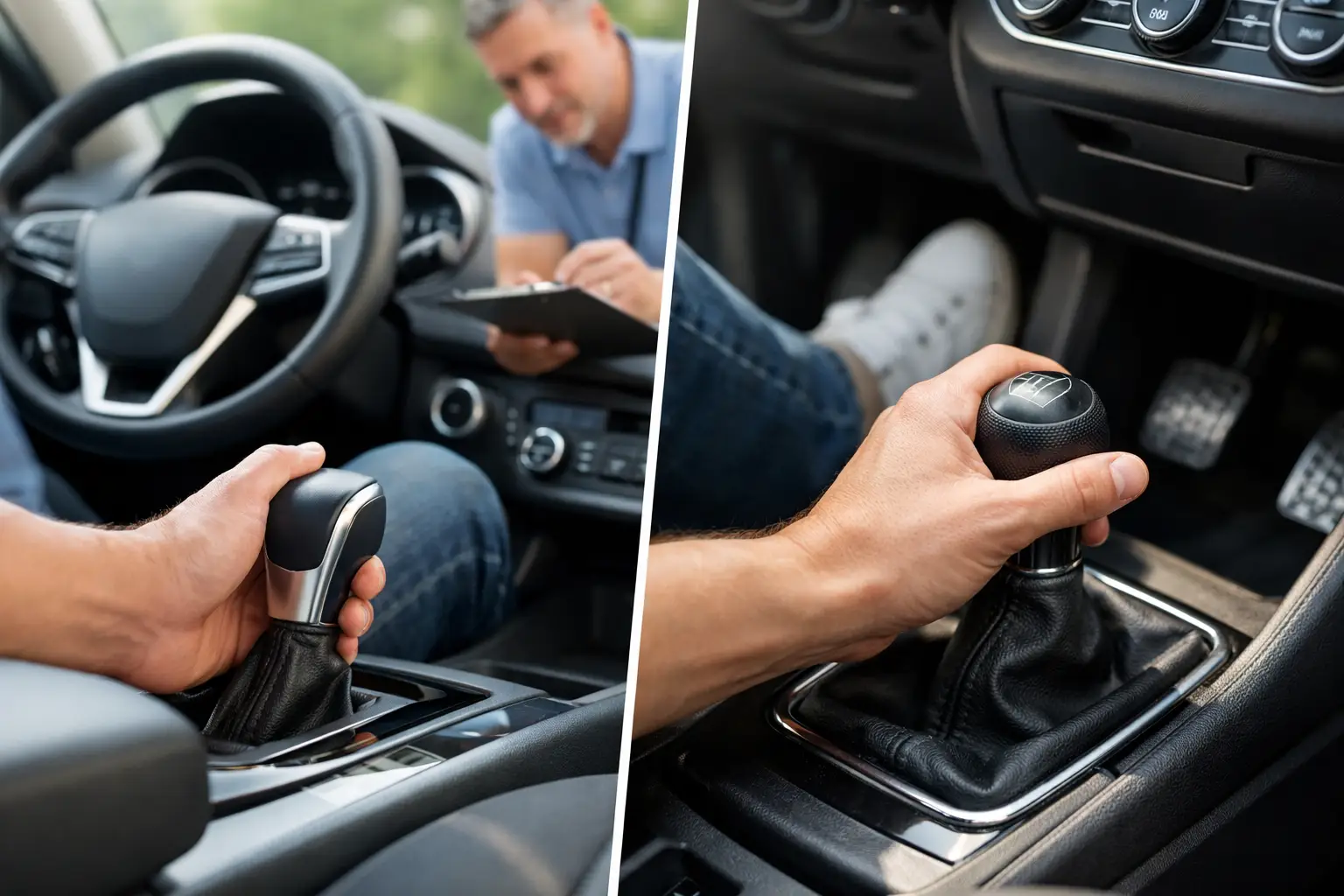
The most obvious difference is how the car is operated. In a manual car, you use the clutch and change gears yourself. In an automatic, the car changes gear for you. That sounds simple enough, but the effect on learning can be quite significant.
Manual lessons ask you to manage more tasks at once, especially in the early stages. Pulling away, stopping smoothly, hill starts and moving through traffic all involve more coordination. For some learners, that is manageable and worth the effort. For others, it can feel like one demand too many at the point when they are also trying to read signs, judge speed and deal with other road users.
Automatic lessons remove part of that workload. Without the clutch and gear changes, many learners find it easier to focus on observation, planning and steering. That can help confidence grow more quickly, particularly if anxiety is a factor.
Why some learners choose automatic lessons
Automatic lessons are often the right choice for people who want to simplify the learning process. If you have been putting off lessons because driving feels overwhelming, automatic tuition can make things feel more approachable.
This can be especially useful for nervous beginners, busy adults and university students trying to fit learning around work or study. When there are fewer physical actions to think about, some people settle into the road environment faster and make progress sooner.
Automatic cars are also becoming more common, especially as electric vehicles grow in popularity. If you expect to drive an automatic vehicle long term, learning in one may be the most practical route.
That said, there is a trade-off. Passing your test in an automatic means you can only drive automatic cars, unless you later pass another test in a manual. If flexibility matters to you, that restriction is worth thinking about carefully.
Why some learners still prefer manual
Manual lessons remain a strong option for plenty of learners. A manual licence allows you to drive both manual and automatic cars, which gives you more freedom later on. That can matter if you want a wider choice when buying a first car, sharing a family vehicle or borrowing one when needed.
Manual cars are often still easier to find on the used market at lower price points, although that is changing gradually. For younger drivers or anyone trying to keep motoring costs down, that practical advantage may carry real weight.
Some learners also like the sense of control manual driving gives them. Once the clutch control and gear changes become natural, many drivers feel more engaged and capable. The learning curve can be steeper, but for the right person it is worthwhile.
Cost, speed and confidence – which matters most?
People often assume automatic is always cheaper because some learners pass faster. Sometimes that is true, but not always. Lesson prices for automatic tuition can be slightly higher in some areas, and the total cost depends on how many lessons you need before test standard.
Manual may take longer for some learners because there is more to master. But if you pass in a manual and avoid needing extra training later, that can make sense financially in the long run. On the other hand, if manual lessons leave you tense and slow your progress, automatic may be better value because it helps you move forward with more confidence.
This is why the cheapest option on paper is not always the best option in practice. A learning style that suits you well often saves time, frustration and repeated setbacks.
How to choose the right automatic and manual driving school
When comparing schools, look beyond whether they offer both types of car. The better question is how they teach. A strong automatic and manual driving school should provide patient, one-to-one tuition, realistic guidance on progress and lessons that build safe habits for everyday driving.
You should also check whether instructors are DVSA approved and whether the school has experience supporting different kinds of learners. A confident 17-year-old beginner may need a very different teaching approach from an adult who has failed a test before or someone returning for refresher lessons.
Local knowledge matters too. Learning with an instructor who understands the roads around Bath, Bristol, Keynsham and Kingswood can make your lessons more relevant and your test preparation more practical. Busy roundabouts, residential streets, hill starts and test routes all feel easier to tackle when your lessons are shaped around the places you are likely to drive.
Structured lesson options can help as well. Regular 2-hour sessions and block bookings often give better continuity than irregular one-off lessons. You spend less time revisiting old ground and more time building momentum.
Who is automatic best for?
Automatic is often a strong fit for learners who want to reduce mental overload in the early stages. If you are very anxious, struggle with coordination, or simply want to focus on road awareness first, it may suit you well. It can also work nicely for people learning mainly for commuting, family travel or day-to-day independence rather than for the experience of driving a particular type of car.
It is also a practical choice if your household already uses an automatic vehicle. In that case, learning in the same type of car you will actually drive makes obvious sense.
Who is manual best for?
Manual tends to suit learners who want the broadest licence options and are comfortable taking on a slightly more demanding learning process. If you expect to buy a cheaper first car, share vehicles with others or want maximum flexibility in future, manual is often worth considering.
It is also a good choice if you are progressing steadily and not feeling put off by clutch control or gear changes. Early difficulties do not automatically mean manual is wrong for you. Sometimes a calmer teaching style and more consistent lessons are enough to turn things around.
It is fine to change your mind
One of the most common worries learners have is getting the decision wrong. In reality, it is not unusual to start in one type of car and then reassess. If manual lessons are causing too much stress and slowing your confidence, changing to automatic can be the sensible move. If you begin in automatic and later want the flexibility of a manual licence, you can work towards that when you are ready.
The key is not pride. It is progress. Learning to drive should move you towards safe, independent driving, not trap you in a format that is making things harder than they need to be.
A supportive school will help you make that call honestly. At SE7EN Driving School, the focus is on helping learners become safe, confident drivers for life, not just rushing them towards a test date that does not reflect real readiness.
The best choice is the one that keeps you moving forward
If you are choosing between automatic and manual, try to be honest about how you learn best. Think about your confidence, your budget, the type of car you are likely to drive after passing and how much flexibility you want in future. Then choose a school that teaches with patience, structure and local understanding.
Driving lessons should leave you feeling more capable each week, not more doubtful. When the teaching is right and the car type suits you, progress becomes steadier, safer and far less stressful. That is usually the clearest sign you are on the right road.